
5 Tips for Dealing with Difficult Tenants

Dealing with difficult tenants is never easy, but with preparation, empathy, and clear policies, you can turn tense situations into manageable outcomes.
dealing with difficult tenants

5 Effective Ways to Defuse Aggressive Situations Before They Escalate

If you’re in property management, chances are you’ve faced a challenging tenant interaction, perhaps even recently. It could’ve been an angry tenant slamming a door, shouting in the leasing office, or sending threatening messages, dealing with difficult tenants can feel overwhelming. And you’re not alone. In fact, a 2024 National Apartment Association poll revealed that aggressive or abusive tenant behavior is the number-one challenge faced by 22 percent of multifamily professionals.

When you’re responsible for maintaining community harmony, aggressive tenants don’t just stress you out, they put your staff, other residents, and the property’s reputation at risk. Mismanaging tenant interactions can even land your property in legal trouble. In 2023, the National Fair Housing Alliance recorded 34,150 Fair Housing complaints, many due to poorly handled tenant issues.

But here’s the good news: with empathy, confidence, and professionalism, you can manage even the toughest tenant conflicts effectively. Here are five proven strategies to defuse aggressive situations before they escalate.

1. Use the 90-Second De-Escalation Technique

Property Managers Often Ask:

“What’s the best way to handle the initial moments of a tenant confrontation?”
Believe it or not, those initial 90 seconds after a confrontation begins are critical. Why? According to neuroscience, the stress hormone cortisol peaks and typically fades significantly after about a minute and a half. How you respond during this critical window can determine whether things escalate or cool down.
Here’s a simple yet powerful script to handle this scenario calmly:

Empathize first:
“I completely understand why this is upsetting for you.”

Clarify their issue:
“Can you help me clearly understand exactly what’s happened?”

Offer a clear next step:
“Here’s what I’ll do right now, and here’s when you can expect to hear back.”

Pro Tip: Spend a few minutes each week practicing this exact script. Try recording yourself and reviewing your tone and body language. This simple exercise can significantly improve your confidence, making real-life confrontations feel less intimidating.

dealing with difficult tenants

2. Create a Calming “Cooling-Off” Space

Property Managers Often Ask:

“Does our leasing office environment really influence tenant behavior?”

Absolutely! Your physical surroundings have a direct impact on mood and aggression. To reduce tensions, consider creating a calming environment specifically designed to defuse tenant conflicts:
  • Neutral meeting areas: Opt for semi-private spaces with glass walls for transparency, reducing the sense of confrontation or entrapment.
  • Seating psychology: Use chairs of equal height, ensuring tenants and staff see each other as equals, fostering open communication.
  • Calming sensory elements: Incorporate soft lighting and calming scents, such as lavender or bergamot—scientifically proven to lower stress and aggression levels.

Action Point: This week, set up a small essential-oil diffuser in your leasing office. A welcoming aroma subtly signals tenants that you’re here to help, not fight.

property manager talking with angry tenant

3. Digitally Document Everything Immediately

Property Managers Often Ask:

“What’s the best way to document tenant interactions to protect ourselves legally?”
Documentation is your best friend when dealing with difficult tenants. Clear and immediate documentation can protect you legally and reinforce your professionalism:
  • Real-time digital notes: Use your property management software or note-taking apps that timestamp entries.
  • Visual evidence: Take immediate photos or videos if property damage or safety issues are involved.
  • Voice memos: Quickly record a voice memo recapping the situation immediately afterward, so details remain fresh.
Documentation isn’t about distrust; it’s about clarity and fairness, ensuring that every situation is handled consistently and professionally.

Pro Tip: Immediately after an interaction, remind yourself out loud, “Time to document this.” Make this a habit—it’s an insurance policy against future disputes.

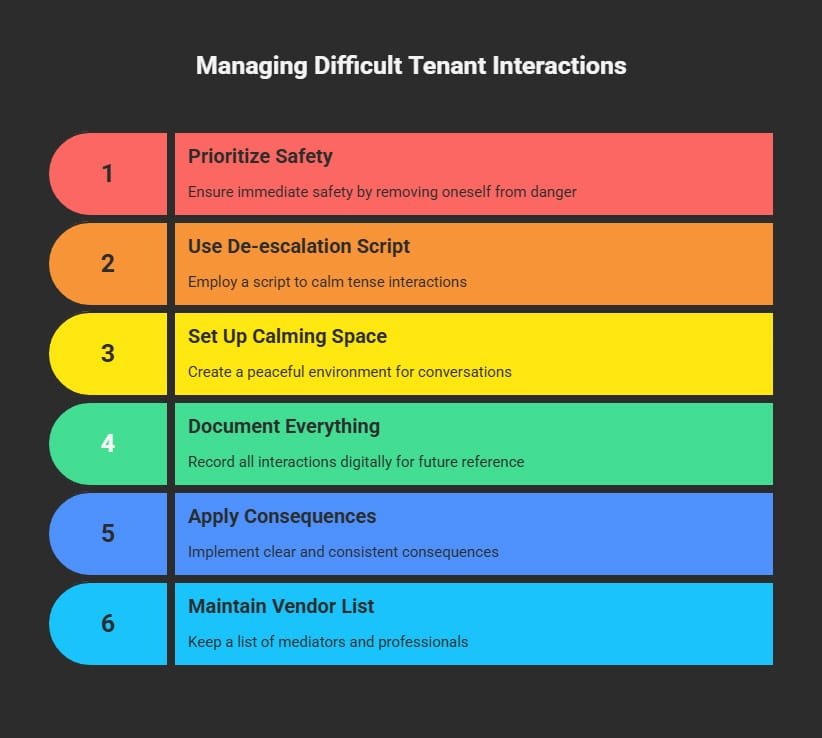
4. Establish Clear Consequence Pathways, Not Empty Threats

Property Managers Often Ask:

“How do we enforce lease terms without risking Fair Housing violations?”
Tenants must clearly understand the consequences of their behavior. A transparent, fair, and consistently applied disciplinary process prevents misunderstandings, accusations of unfair treatment, and potential legal issues:
Here’s a simple yet effective disciplinary pathway:
  1. Verbal warning: Clearly discuss the issue.
  2. Written notice: Formally document the violation.
  3. Notice to cure or quit: Specify required corrective actions.
  4. Eviction filing (if necessary): Reserved for serious or unresolved violations.
Consistency and fairness are key. Every tenant must receive identical treatment to prevent Fair Housing complaints.
Action Point: This month, hold a policy review session with your team. Ensure your disciplinary procedures align with your state laws and Fair Housing guidelines. Use scenarios to test your team’s readiness.

5. Leverage Third-Party Experts and Mediators

Property Managers Often Ask:

“When should we involve outside experts in tenant disputes?”
You don’t have to handle every tenant conflict alone. Often, bringing in neutral third-party professionals can swiftly defuse a tense situation:
  • Professional mediation: Ideal for interpersonal conflicts like noise complaints or neighbor disputes.
  • Community police liaisons: Many local police departments offer specially trained community officers to mediate tense landlord-tenant situations.
  • Mental health experts: For situations involving tenants experiencing emotional distress or mental health issues, local mental health services can provide invaluable assistance.
Knowing who to call and when can dramatically reduce stress and resolve conflicts quicker.
Pro Tip: Create and regularly update a trusted vendor list including mediators, law enforcement liaisons, and mental health resources. Introduce these contacts to your entire team at your next staff meeting. Preparation helps your team feel confident and supported.
dealing with difficult tenants
What should I do if a tenant becomes physically threatening?

Your safety and your staff’s safety come first. If a tenant becomes physically aggressive, disengage immediately and remove yourself from the situation. Contact law enforcement without delay. Never attempt to resolve a situation involving physical violence on your own.

Can I record a conversation with a tenant for documentation?

Recording laws vary by state. Some require one-party consent, while others mandate all-party consent before recording. Always check your state’s regulations and, when in doubt, obtain written or verbal consent from the tenant before recording any interaction.

What can I do if a tenant harasses other residents but not staff directly?

You still have a responsibility to maintain a safe and peaceful living environment. Ask affected residents to submit written complaints and document each incident thoroughly. Issue lease violation notices when necessary and consider mediation or legal action based on the severity of the behavior. Consistent enforcement of community rules is critical to protect all residents.

What is the best way to handle tenants who repeatedly break community rules despite warnings?

Consistency is key. Apply your enforcement policy exactly as written in your lease agreement. Start with a written warning, then issue formal notices for repeated violations. Keep detailed documentation of every infraction and communication. If the pattern continues, involve legal counsel to determine whether termination or non-renewal of the lease is appropriate.

How should I handle a tenant who refuses to follow through on agreed resolutions?

When a tenant agrees to resolve an issue but fails to follow through, reinforce the commitment in writing. Send a summary email or letter immediately after the agreement, including deadlines and consequences for non-compliance. If they still fail to act, escalate according to your lease and local laws—usually beginning with a formal notice. Consistent enforcement shows tenants you take agreements seriously.

Final Thoughts

Dealing with difficult tenants is never easy, but with preparation, empathy, and clear policies, you can turn tense situations into manageable outcomes. Stay consistent, document every step, and know when to bring in professional support. A proactive approach doesn’t just protect your property—it strengthens your community and builds trust with residents.

Lastly, your experiences matter! Have a challenging tenant situation you’d like to share or a question about handling tough interactions? Comment below—your insight can help other managers navigate similar situations confidently and professionally.

Ready to Transform Your Property Management Approach?

Handling difficult tenants is just one part of the puzzle—strong leadership, clear systems, and confident teams make all the difference. At Property Management Gurus, we specialize in coaching and advisement for multifamily professionals who want to:

✅ Build stronger teams
✅ Reduce costly turnover
✅ Handle conflict with confidence
✅ Protect NOI and reputation

Let’s talk about how we can help you create a thriving community and stress-free management process.

📞 Schedule your free 30-minute consultation today!
👉 Contact Us Now

Additional Topic Blogs

Automate, Delegate, Eliminate: Time Management for Property Managers

Time Management Hacks for Property Managers: 15 Tasks to Automate, Delegate, or Eliminate

Read More

5 Tips for Dealing with Difficult Tenants

Dealing with difficult tenants is never easy, but with preparation, empathy, and clear policies, you can turn tense situations into...

Read More

Raising Rent Tips: 5 Proven Strategies to Increase Rent Without Losing Tenants

Learn 5 proven rent-raising tips, from communication to timing, without risking tenant turnover. Keep occupancy high and relationships positive.

Read More

7 Strategies to Improve Tenant Retention

Improving tenant retention doesn’t require massive budgets or complicated systems—it’s about being proactive, responsive, and human.

Read More

Hi! We're Property Management Gurus

We provide comprehensive rental market comparisons, expert coaching, and valuable resources tailored for property managers, leasing agents, regional property managers, maintenance supervisors, rental property owners, developers, and investors.

Table of Contents

Recent Blogs

Contact Us

We’d love to chat about how we can help. We offer comprehensive consulting and coaching services.